A 12-minute audio track that claims to raise a brain protein linked to memory sounds like it belongs in a lab, not on your phone. Yet that’s exactly the pitch behind The Brain Song, a digital gamma-frequency audio program built around Brain-Derived Neurotrophic Factor (BDNF) — and it’s become one of the most searched brain-health audio products of 2026.
This review goes further than the typical sales-page breakdown. Below, you’ll find an independent look at the actual neuroscience behind gamma entrainment and BDNF, a plain-language explanation of how the program is built, a transparent pricing and refund breakdown, and answers to the questions real buyers ask before — and after — they purchase. Where the science is solid, we say so and link to the primary research. Where it’s still an open question, we say that too.
Official Website – Click Here
Overall Rating : ☆☆☆☆☆ (4.9/5)
Quick Verdict
The Brain Song is a legitimate application of a real, actively researched phenomenon — gamma brainwave entrainment — wrapped in typical direct-response marketing language. The underlying mechanism (auditory stimulation nudging brain activity toward the 30–100 Hz gamma band) is measurable and has genuine peer-reviewed backing. What’s not independently verified is whether this specific 12-minute consumer audio track raises human BDNF levels enough to produce the memory and focus improvements described in user reports. At roughly $39 with a 90-day refund window, the financial downside of testing it yourself is small, but it shouldn’t be mistaken for a clinically validated treatment.
What Is The Brain Song?
The Brain Song is a downloadable digital audio program built around a 12-minute daily listening session. It combines binaural beats and isochronic tones tuned to the gamma frequency range with a short activation cue at the start of the track, intended to shorten the time it takes your brain to synchronize with the target frequency.
The full package is delivered instantly after purchase and typically includes:
- The core 12-minute gamma-frequency audio track
- A companion guide explaining the BDNF mechanism and optimal listening times
- A short bonus technique for memory encoding
- A secondary “deep focus” audio track tuned closer to the beta-gamma transition
- A 90-day money-back guarantee through the seller’s standard buyer-protection process
There’s no app to install and no subscription — you download standard audio files that play on virtually any device, from a phone to a basic MP3 player.
The Science: What Gamma Brainwaves and BDNF Actually Are
To evaluate any brainwave-audio product fairly, it helps to separate three distinct claims: (1) gamma brainwaves are real and measurable, (2) gamma stimulation has documented biological effects, and (3) this specific product reliably produces those effects in a home-use, audio-only format. The first two are well supported. The third is where healthy skepticism belongs.
What Are Gamma Brainwaves?
Gamma waves are the fastest brain oscillation band recorded on EEG, generally defined as 30–100 Hz, with much of the research clustering around 40 Hz specifically. They’re associated with high-order cognitive processing — attention binding, working memory, and the synchronization of activity across different brain regions.
The 40 Hz Research Behind the Trend
The scientific interest in 40 Hz stimulation accelerated sharply after a landmark 2016 study out of MIT’s Picower Institute, led by neuroscientist Li-Huei Tsai. Researchers found that exposing Alzheimer’s model mice to 40 Hz sensory stimulation reduced amyloid plaque load and altered microglial activity, a finding published in Nature under the title “Gamma frequency entrainment attenuates amyloid load and modifies microglia.”
That single study kicked off what MIT researchers now call GENUS — Gamma ENtrainment Using Sensory stimuli. Follow-up work showed the flashing-light protocol produced several beneficial effects in animal models, and the approach has since expanded well beyond mice. By 2022, the same MIT team published pilot human trials showing that audio-and-visual gamma stimulation was safe and well tolerated, successfully increased 40 Hz power and coherence across the brain, and was associated with reduced brain atrophy, improved sleep patterns, and better face-name association memory after three months compared to untreated participants.
A 2025 review from the same lab reinforced that the evidence base has kept expanding, with a decade of studies from MIT and other labs consistently showing that 40 Hz stimulation — via light, sound, or a combination — reduces markers of neurodegeneration and supports memory and cognition across multiple Alzheimer’s model systems. It’s worth noting, however, that the strongest and most consistent results to date come from combined audio-visual protocols and from populations with diagnosed neurodegenerative disease — not from audio-only sessions in healthy adults. That distinction matters when evaluating any consumer audio product, including The Brain Song.
What Is BDNF, and Why Does It Matter for Memory?
Brain-Derived Neurotrophic Factor is a protein that supports neuron survival, strengthens synaptic connections, and plays a central role in how the brain encodes and retains new information. According to a widely cited neuroscience review, BDNF is a key molecule involved in the plastic changes that underlie learning and memory, and its expression is closely tied to normal aging as well as conditions like depression and neurodegenerative disease. The same review notes that interventions such as exercise and certain medications are known to enhance BDNF expression — which is part of why exercise is so consistently recommended for long-term brain health.
BDNF naturally declines with age and chronic stress, and that decline tracks closely with the memory complaints many adults start noticing in their 40s and 50s. The core premise of gamma-audio products like The Brain Song is that sound-driven brainwave entrainment can be added to the list of BDNF-supporting activities, alongside exercise, sleep, and learning. That premise is scientifically plausible given the gamma research above — but a plausible mechanism is not the same as a proven consumer outcome, and no independent, peer-reviewed human trial has isolated a 12-minute audio-only track and measured its BDNF effect in the way the GENUS light-and-sound studies have.
How The Brain Song Works: Session Breakdown
A single listening session is built around four layered processes:
- Activation cue (first 10–15 seconds). A specific sound pattern intended to speed up the brain’s shift toward gamma-range activity, rather than relying on the five-to-ten-minute ramp-up typical of standard entrainment audio.
- Binaural and isochronic gamma entrainment. Binaural beats present slightly different frequencies to each ear; isochronic tones use a single pulsed tone. Both are established entrainment techniques, and the frequency gap between them is set within the gamma range for the remainder of the track.
- BDNF-supportive stimulation window. This is the theoretical mechanism discussed above — sustained gamma activity creating conditions that may favor BDNF release, extrapolated from the broader gamma-stimulation literature rather than confirmed by a product-specific clinical trial.
- Cumulative neuroplastic exposure. No single session is claimed to create lasting change. The program’s own guidance — consistent with how neuroplasticity is generally understood — frames results as a product of repeated daily exposure over two to four weeks, not a one-time effect.
Is This The Brain Song Original? Avoiding Counterfeit or Copycat Listings
Because “the brain song original” is one of the most common searches around this product, it’s worth addressing directly. Digital audio programs sold through affiliate networks are frequently copied, re-uploaded, or sold under near-identical names on third-party marketplaces and file-sharing sites. Buying from an unofficial source carries three real risks:
- No refund protection. The 90-day guarantee only applies to purchases made through the authorized checkout. A copied file from a third-party site comes with no such protection.
- Tampered or incomplete audio. There’s no way to verify that a re-uploaded file matches the original frequency specifications, and a poorly re-encoded or mislabeled track could deliver the wrong entrainment frequency entirely.
- Security risk. Unofficial “free download” links for paid digital products are a common vector for malware, particularly on mobile devices.
The safest way to confirm you’re getting the original program is to purchase directly through the official checkout link rather than a search-result download page, a forum post, or a marketplace listing that isn’t the verified seller.
Mobile-Friendly, Fast-Loading Access: What to Expect
Since the entire product is delivered as a digital download, real-world usability comes down to two things: how quickly you can access your files after purchase, and how well those files perform across devices.
- Instant delivery. Digital fulfillment through the official checkout is automated — files are available for download immediately after payment clears, with no shipping wait.
- Cross-device compatibility. The audio is provided in standard formats that play on phones, tablets, laptops, and dedicated MP3 players without requiring a proprietary app.
- No ongoing connectivity required. Once downloaded, sessions play offline, which matters for a program designed to be used first thing in the morning, when Wi-Fi or data may not be reliable.
- Lightweight files. Because the core track is roughly 12 minutes of audio rather than video, file sizes stay small enough to download quickly even on a mobile connection, and to store comfortably without eating into phone storage.
If you’re purchasing from a mobile device, look for a checkout page that loads quickly and renders cleanly on a small screen — that’s generally a good proxy for a legitimate, well-maintained seller versus a low-effort copycat page.
Reviews and Star Ratings: What “Reviews Schema” Actually Means Here
You may notice that some search results for brain-health products display star ratings directly beneath the page title. That visual element comes from review schema — structured data (schema.org markup) that a website adds to its code so search engines can display aggregate rating information in search results. It’s a technical SEO feature, not a guarantee of authenticity.
Two practical takeaways for shoppers:
- Star ratings in search results reflect what a site has marked up, not necessarily third-party verification. Legitimate product review schema is usually paired with genuine on-page testimonials and a transparent review count; be more cautious of pages showing a suspiciously perfect 5.0 average with no visible negative feedback anywhere.
- Independent verification matters more than the schema itself. Because The Brain Song is sold through an affiliate retail platform rather than a marketplace with public, verified buyer reviews (like Amazon), there’s no independent third-party review database to cross-check claims against. That’s not disqualifying, but it does mean the “reviews” on any sales page — including aggregated user reports about memory or focus improvements — should be read as anecdotal rather than as clinical evidence.
Key Features: What You Actually Get
| Included Item | Purpose |
|---|---|
| 12-minute core gamma audio track | Daily entrainment session |
| Activation cue | Shortens the ramp-up to gamma state |
| BDNF guide (PDF) | Explains mechanism and session timing |
| Memory encoding technique | Short exercise to pair with the session |
| Deep focus audio track | Secondary track for concentration-heavy tasks |
| Digital download, no app | Cross-device playback, offline use |
| 90-day refund window | Buyer protection via the retail platform |
Pros and Cons
Pros
- Built on a real, actively studied phenomenon (gamma entrainment)
- Short, low-friction daily time commitment (about 12 minutes)
- No pills, supplements, or complicated protocols
- Works on any device with basic headphones
- One-time purchase — no recurring subscription
- 90-day refund window is unusually long for this product category
- Bonus tracks extend utility beyond the core session
Cons
- No independent clinical trial has tested this specific audio product on human BDNF levels
- Requires genuine daily consistency — irregular use is unlikely to produce results
- Sold only through the official checkout, not through major retail marketplaces with public review systems
- Marketing copy on the original sales page states outcomes more confidently than the underlying evidence currently supports
- Some users report no noticeable change in the first two to three weeks
How to Use The Brain Song
- Purchase and download immediately. Save all files — the core track, the guide, and both bonus tracks — to your primary device so you’re not dependent on an internet connection for daily use.
- Read the BDNF guide before your first session. Understanding the timing recommendations up front makes it easier to stay consistent through the first, often uneventful, week or two.
- Pick a consistent daily window. Many gamma-audio protocols recommend a morning session, shortly after waking and before screen exposure, when cortisol is naturally higher. An evening session before sleep is typically the next-best alternative.
- Avoid using it during any activity that requires full alertness. Because the audio is designed to shift brain activity into a more internally focused state, it should never be used while driving, operating equipment, or exercising.
- Commit to at least three to four weeks before judging results. Neuroplastic change, by definition, accumulates over repeated exposure rather than appearing after a single session.
- Layer in the bonus tracks intentionally. Use the deep-focus track ahead of demanding work sessions, and pair the memory technique with material you’re actively trying to retain.
Pricing and Refund Policy
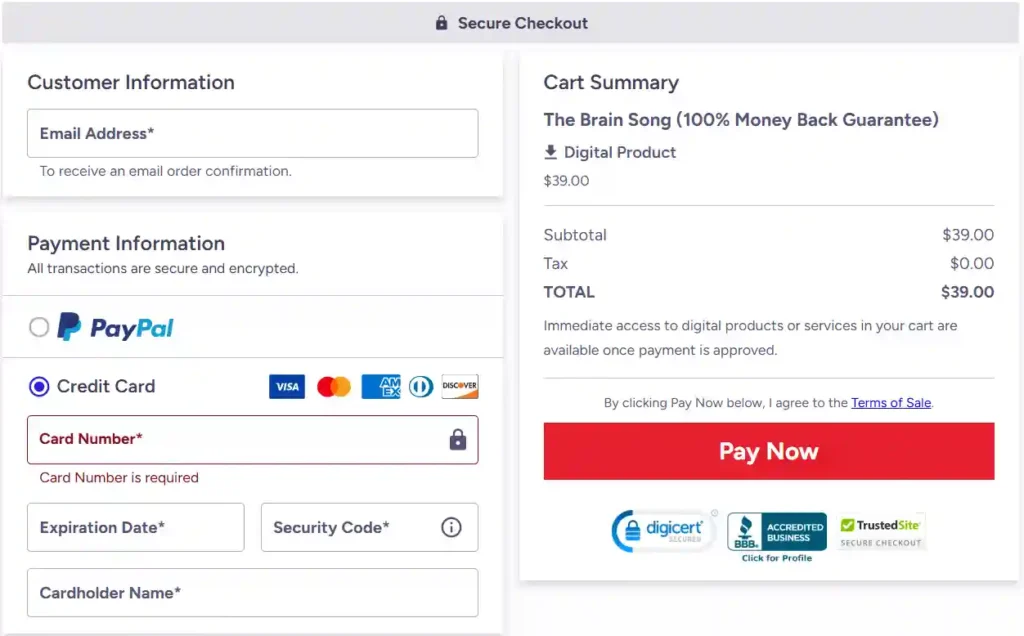
The Brain Song is typically offered at a promotional price of around $39, discounted from a stated regular price of $197, as a one-time digital purchase with no subscription. It comes with a 90-day money-back guarantee processed through the retail platform’s standard buyer-protection procedures — generally requiring no explanation or proof of use, though it’s worth confirming the current terms on the official checkout page before purchasing, since promotional pricing and guarantee terms on affiliate-marketed products can change without notice.
Who Is — and Isn’t — a Good Fit
Likely a good fit:
- Adults over 40 concerned about everyday memory lapses (names, appointments, misplaced items)
- Knowledge workers dealing with predictable afternoon focus decline
- People who want a passive, non-pharmaceutical addition to an existing brain-health routine (sleep, exercise, diet)
- Buyers comfortable treating this as a low-cost personal experiment rather than a guaranteed fix
Probably not a good fit:
- Anyone seeking a substitute for medical evaluation of significant or rapidly progressing memory loss
- People who won’t realistically commit to daily use for at least three to four weeks
- Anyone with a diagnosed neurological or seizure-related condition — audio and light-based entrainment products should be discussed with a physician first, since rhythmic sensory stimulation can be a consideration for some neurological conditions

Frequently Asked Questions
Is The Brain Song backed by clinical research? The underlying mechanism — gamma brainwave entrainment and its relationship to BDNF and neuroplasticity — has real, peer-reviewed research behind it, including the MIT GENUS studies. However, no independently published clinical trial has tested this specific commercial audio product. The science supports the concept; it doesn’t yet validate the product outcome.
How is this different from other brainwave or meditation audio apps? Most mainstream meditation and relaxation audio targets alpha or theta frequencies, associated with calm, drowsy, or light-meditative states. Gamma entrainment targets a much faster frequency band associated with active cognitive processing rather than relaxation, which is a meaningfully different mechanism and experience.
Can I use it more than once a day? The program’s guidance centers on one daily session. There’s no strong evidence in the gamma-entrainment literature that multiple sessions per day accelerate results, and consistency over time appears to matter more than session frequency.
Is it safe for daily long-term use? Auditory brainwave entrainment is generally considered low-risk for most healthy adults. That said, anyone with a history of seizures, migraines triggered by rhythmic stimuli, or another neurological condition should check with a physician before starting any entrainment-based audio program.
What happens if I stop using it? Because the claimed benefits are tied to cumulative neuroplastic change rather than a permanent structural rewrite, it’s reasonable to expect that benefits built through consistent use may fade over time if daily listening stops — similar to how the effects of exercise or meditation aren’t permanent once the habit stops.
How do refunds work if I’m not satisfied? Refund requests are typically handled through the retail platform’s support channel within the guarantee window (commonly 90 days from purchase). Keep your order confirmation email, since it usually contains the information needed to process a refund.
Final Verdict
The Brain Song sits in an unusual middle ground: the science it’s built on is genuinely real and actively researched at institutions like MIT, but the specific product has not been independently validated the way the underlying gamma-entrainment research has. That’s a meaningfully more honest position than most brain-health products occupy, many of which reference vague “studies show” language without any traceable source.
If you’re evaluating this as a low-cost, low-effort experiment — with a long refund window as a safety net — it’s a reasonable one to run. If you’re looking for a clinically proven memory treatment, it’s important to be clear-eyed that this product hasn’t been tested to that standard, and it shouldn’t replace medical evaluation for significant memory concerns.